
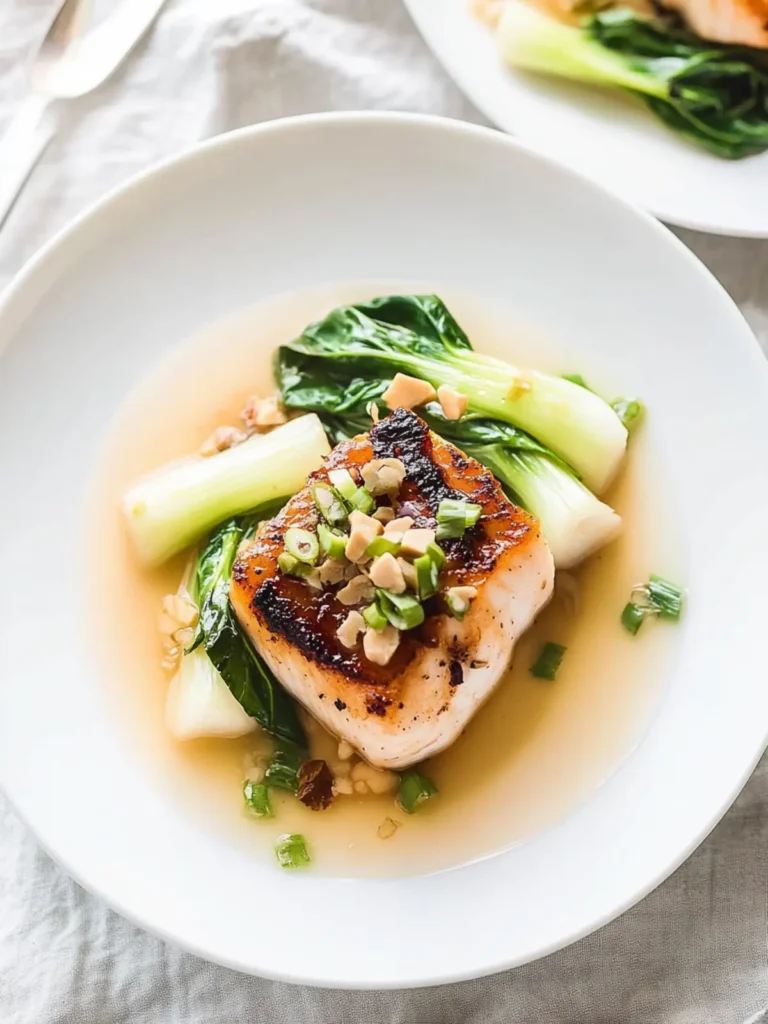
When I first tasted Miso Glazed Halibut with Baby Bok Choy and a Sake Butter Sauce at a cozy little restaurant, I was immediately transported to a culinary paradise. The delicate flavor of the halibut, subtly kissed by the umami-rich miso glaze, sang with every bite. I couldn’t believe such a gourmet experience could be created in my own kitchen—let alone in under 45 minutes!
Perfect for those evenings when you want to impress guests or simply indulge in a comforting meal at home, this dish brings together the crunchy freshness of garlic-infused baby bok choy and the luxurious depth of a silky sauce made with sake. It’s a delightful fusion of flavors that reassures your taste buds while effortlessly elevating your weeknight dinners.
Join me in recreating this stunning dish that not only pleases the palate but transforms any meal into a special occasion!

Why Love Miso Glazed Halibut?
Simplicity: Preparing this dish is uncomplicated, needing just 45 minutes from start to finish.
Rich Flavors: The miso glaze, sake butter sauce, and tender halibut create a mouthwatering combination that feels gourmet yet homey.
Healthy Ingredients: Packed with omega-3s from halibut and vibrant vegetables, this is a nourishing meal you can feel great about.
Versatile Options: This recipe allows for easy ingredient swaps—consider fresh snapper for a unique twist or try different greens like spinach.
Impress Your Guests: Elevate any gathering or cozy dinner with this standout meal that’s sure to get rave reviews! To make things even easier, check out how to prepare a quick miso glaze beforehand for a seamless cooking experience.
Miso Glazed Halibut Ingredients
• Dive into the flavors with these must-have ingredients for a delicious Miso Glazed Halibut experience!
For the Fish
- Halibut – A rich, buttery fish that flakily melts in your mouth. Substitution: Fresh snapper or any firm white fish can also work beautifully.
- Miso Paste – This unami-packed ingredient provides depth to the glaze. Substitution: Use soy sauce or tamari for a lighter option.
For the Sauce
- Sake – This key component adds a subtly sweet depth to your butter sauce. Substitution: Dry white wine can be used, but the flavor will vary slightly.
- Butter – Essential for creating the creamy texture of the sake butter sauce. Note: Opt for unsalted butter for better control over saltiness.
For the Veggies
- Baby Bok Choy – Delivers a refreshing crunch that complements the fish. Substitution: You can replace it with spinach or Chinese mustard greens for variety.
- Garlic – Brightens all the flavors and enhances the dish. Note: Feel free to omit if you prefer a milder taste.
- Scallions – Adds a fresh garnish, perfect for color and bite. Substitution: Chives or green onions can work as alternatives.
Each ingredient plays a crucial role in crafting the delightful Miso Glazed Halibut with Baby Bok Choy, ensuring every bite is full of flavor and satisfaction!
How to Make Miso Glazed Halibut
-
Prepare the Glaze: Whisk together the miso paste, sake, and a little butter in a bowl until smooth. This blend creates a rich, savory glaze that will enhance the halibut’s flavor beautifully.
-
Marinate the Halibut: Place the halibut in the miso mixture and allow it to marinate for 15-20 minutes. This short wait ensures your fish absorbs those delectable umami flavors deeply.
-
Sauté the Bok Choy: As the halibut marinates, heat a skillet over medium heat. Add minced garlic and sauté until fragrant, then toss in the baby bok choy, cooking until tender and slightly wilted—about 5 minutes.
-
Cook the Halibut: Preheat your oven to 400°F or use the same skillet if pan-searing. Bake or sear the halibut for 8-10 minutes, until it’s cooked through and flakes easily with a fork.
-
Make the Sake Butter Sauce: In the skillet, melt the remaining butter over medium heat. Add the sake and let it simmer, reducing until it reaches a syrupy consistency—this should take about 3-5 minutes.
-
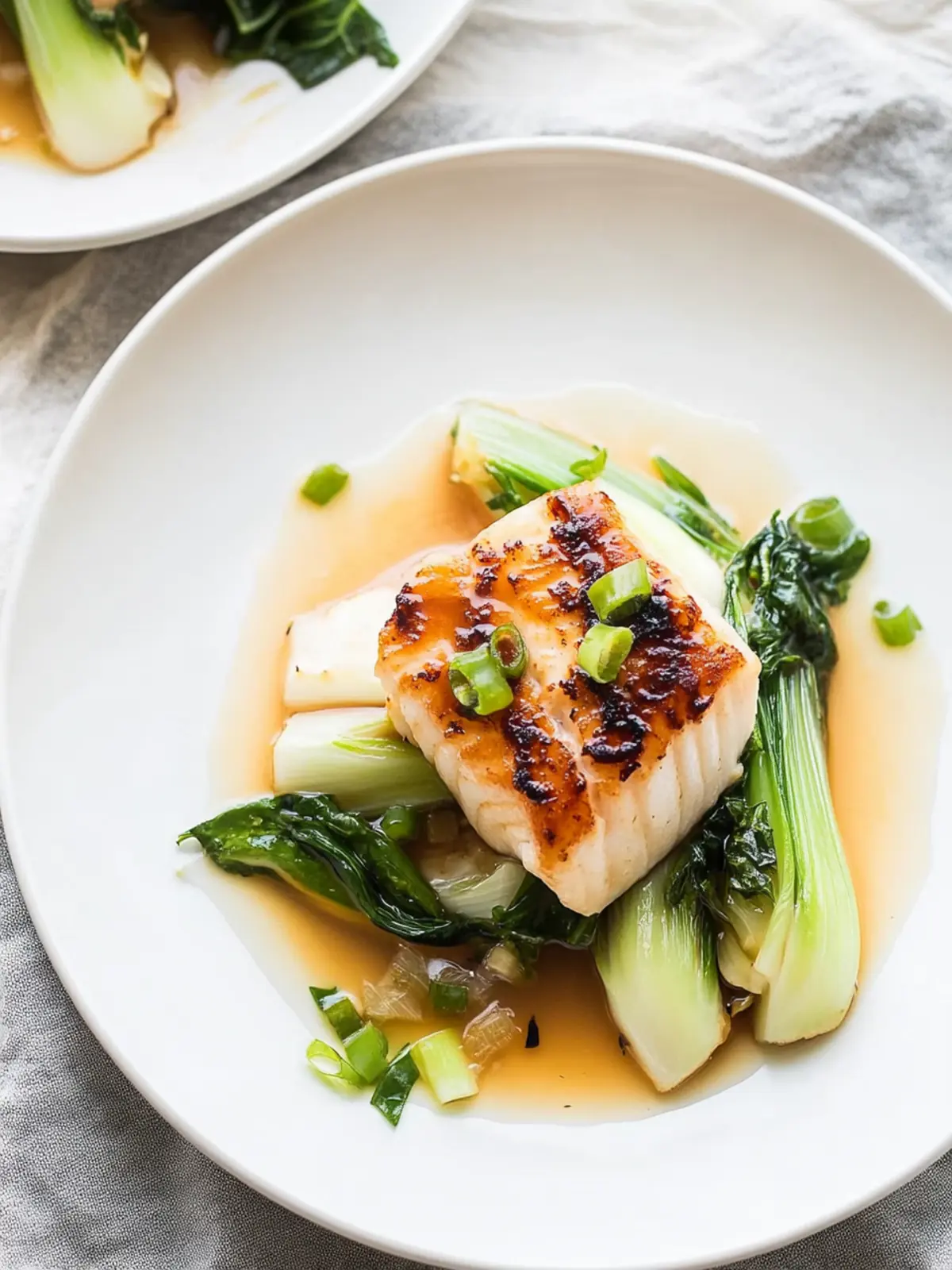
Serve Your Dish: Plate the halibut over the garlicky baby bok choy and drizzle with the silky sake butter sauce. Garnish with scallions for a refreshing touch.
Optional: For an extra burst of flavor, sprinkle sesame seeds on top before serving.
Exact quantities are listed in the recipe card below.

What to Serve with Miso Glazed Halibut?
Enjoy a seaside symphony and create a full meal that dances on the palate with delightful accompaniments.
-
Steamed Jasmine Rice: A fluffy bed of jasmine rice soaks up the succulent sake butter sauce, making each bite a burst of flavor.
-
Crispy Tempura Vegetables: These light and crunchy veggies provide a textural contrast, delighting the senses and adding a touch of indulgence to your plate.
-
Miso Soup: A warm bowl of miso soup echoes the glaze, enriching the experience with its comforting umami notes; perfect for a harmonious meal.
-
Pickled Ginger: These tangy bites cleanse the palate between your savory halibut and bok choy, enhancing the flavors with bursts of brightness.
-
Chilled Sake: Pair your plate with a cup of chilled sake for a celebratory touch; its subtle sweetness beautifully complements the dish’s savory aspects.
-
Sesame Spinach Salad: A fresh salad adds a crispness that lightens the meal, while the sesame dressing mirrors the umami notes of the halibut, tying everything together.
Elevate your dinner with these thoughtful pairings, enhancing the beauty of the Miso Glazed Halibut and creating a memorable dining experience!
Expert Tips for Miso Glazed Halibut
-
Perfect Timing: Ensure the halibut is cooked just until flaky, about 8-10 minutes, to avoid dryness.
-
Check Doneness: Use a meat thermometer to ensure the halibut reaches an internal temperature of 145°F for perfect textures.
-
Watch the Sauce: Keep an eye on the sake butter sauce while it simmers; reduce it until syrupy to achieve the best flavor without burning.
-
Flavor Variations: Feel free to experiment with glazing different fish or seafood using the same miso mixture for delightful variations.
-
Ingredient Prep: To save time, you can prepare the miso glaze and marinate the halibut up to a day in advance, making the cooking process even quicker on the day of serving.
-
Dress it Up: Consider garnishing your dish with toasted sesame seeds or cilantro for an extra pop of flavor and color.
Miso Glazed Halibut Variations
Feel free to make this dish your own with these delightful variations!
-
Snapper Swap: Use fresh snapper instead of halibut for a slightly sweeter flavor and firmer texture. This alternative keeps the dish exciting and allows for experimentation with your favorite fish!
-
Vegan Delight: Replace halibut with firm tofu for a plant-based version. Simply cube the tofu and marinate to absorb those delicious miso flavors. It’s a wonderful way to enjoy the essence of this dish while keeping it vegan-friendly!
-
Miso Medley: Try blending different types of miso paste—red, white, or a combination—for a unique flavor profile. Each type brings its own character, enhancing the umami experience in delicious new ways.
-
Sake Substitutions: If sake isn’t available, use dry white wine or even a splash of rice vinegar for a tangy twist. Each substitute adds its own layer of flavor, keeping your taste buds dancing!
-
Seasonal Veggies: Incorporate seasonal vegetables like asparagus or snap peas along with the bok choy for seasonal freshness and added nutrition. A colorful mix elevates both the presentation and taste!
-
Spicy Kick: Add a touch of sriracha or chili paste to the miso glaze for an exciting heat boost. This fiery addition adds layers of flavor that spice lovers will adore, making every bite a thrilling experience!
-
Nutty Twist: For added texture and flavor, sprinkle sesame seeds or chopped nuts over the finished dish. This crunchy element contrasts beautifully with the soft fish and tender greens.
-
Citrus Zing: Finish with a squeeze of fresh lemon or lime juice just before serving. The citrus brightens the dish and enhances the existing flavors, bringing a refreshing burst that ties everything together!
Make Ahead Options
These Miso Glazed Halibut with Baby Bok Choy and Sake Butter Sauce are perfect for meal prep enthusiasts! You can prepare the miso glaze and marinate the halibut up to 24 hours in advance, ensuring the flavors develop beautifully while allowing you to save time on busy weeknights. To maintain quality, cover the halibut tightly with plastic wrap while marinating in the refrigerator to prevent drying out. Additionally, you can wash and chop the bok choy and garlic up to 3 days ahead, storing them in an airtight container. When you’re ready to serve, simply sauté the bok choy, cook the halibut, and finish with the sake butter sauce for restaurant-quality results in no time!
How to Store and Freeze Miso Glazed Halibut
Fridge: Store any leftover Miso Glazed Halibut in an airtight container for up to 3 days. You can enjoy the flavors again without losing quality by carefully reheating it.
Freezer: If you want to freeze the halibut, wrap it tightly in plastic wrap and then in aluminum foil. It will last for about 2 months. Make sure to thaw it in the fridge overnight before reheating.
Reheating: When ready to serve, gently reheat the halibut in a skillet over low heat to maintain its flaky texture. Adding a splash of sake or vegetable broth can help regain moisture.
Glaze Storage: Store leftover miso glaze in a sealed container in the fridge for up to a week. It’s perfect for glazing other fish or sautéing vegetables!
Miso Glazed Halibut with Baby Bok Choy and Sake Butter Sauce Recipe FAQs
What type of halibut should I choose for the best results?
Absolutely! Look for halibut fillets that are firm and have a bright, translucent appearance. The flesh should be free from dark spots or discoloration, indicating freshness. When you’re at the fish market, ask your fishmonger for the freshest catch available; they often know what’s best that day.
How can I store leftover miso glazed halibut?
You can store any leftover Miso Glazed Halibut in an airtight container for up to 3 days. To reheat, gently warm it in a skillet over low heat, adding a splash of sake or vegetable broth to ensure the fish remains moist and delicious. I often recommend reheating carefully to maintain its flaky texture.
Can I freeze miso glazed halibut?
Yes, you can freeze Miso Glazed Halibut! Wrap the cooled halibut tightly in plastic wrap, followed by aluminum foil, ensuring no air gets in. This will keep it fresh for about 2 months. When you’re ready to enjoy it, simply thaw it overnight in the fridge and then reheat gently.
What should I do if my halibut turns out dry?
To prevent dryness, make sure you cook the halibut just until it flakes easily with a fork, typically around 8-10 minutes. Using a meat thermometer can be helpful; aim for an internal temperature of 145°F. If it does turn out dry, you can serve it with a generous drizzle of the sake butter sauce to add moisture and flavor.
Is this dish suitable for people with allergies?
Be mindful that this recipe contains fish and gluten (from the miso paste), so it’s not suitable for those with fish allergies or gluten intolerance. For a gluten-free option, you could substitute the miso paste with tamari, which is a gluten-free soy sauce. However, always check labels to ensure safety for those with specific allergies.
How long can I keep the miso glaze in the fridge?
You can store any leftover miso glaze in a sealed container in the fridge for up to a week. It’s a versatile sauce perfect for glazing other proteins or tossing with sautéed vegetables. I often make extra glaze because it’s such a fantastic flavor booster for quick meals!
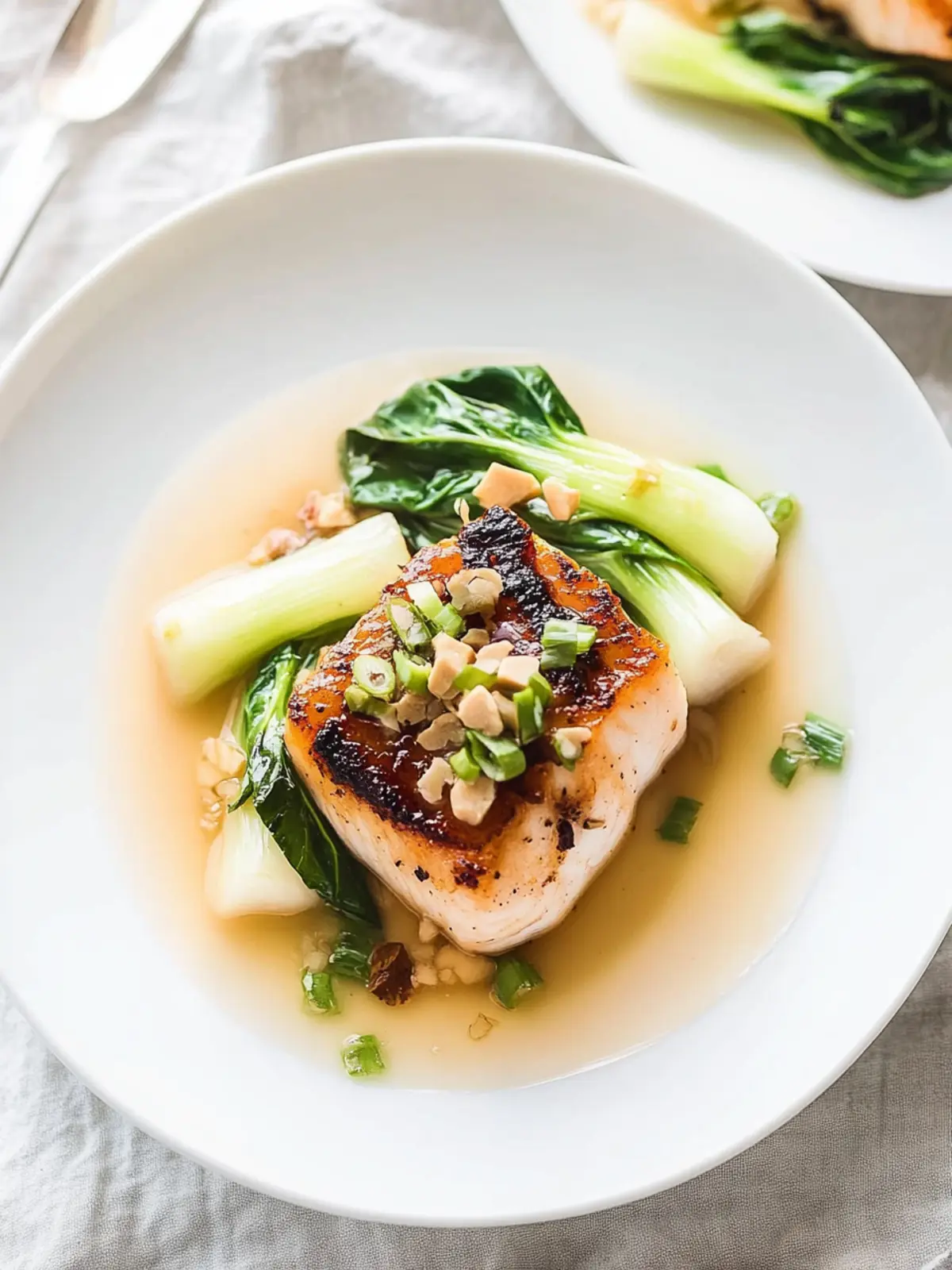
Miso Glazed Halibut with Bok Choy: Sake Butter Bliss
Ingredients
Equipment
Method
- Whisk together the miso paste, sake, and a little butter in a bowl until smooth to prepare the glaze.
- Place the halibut in the miso mixture and allow it to marinate for 15-20 minutes.
- Heat a skillet over medium heat, add minced garlic, and sauté until fragrant, then cook the baby bok choy for about 5 minutes until tender.
- Preheat your oven to 400°F or use the same skillet to bake or sear the halibut for 8-10 minutes.
- Melt the remaining butter in the skillet, add sake, and let it simmer, reducing until syrupy for the sauce.
- Plate the halibut over the garlicky baby bok choy and drizzle with the sake butter sauce; garnish with scallions.