
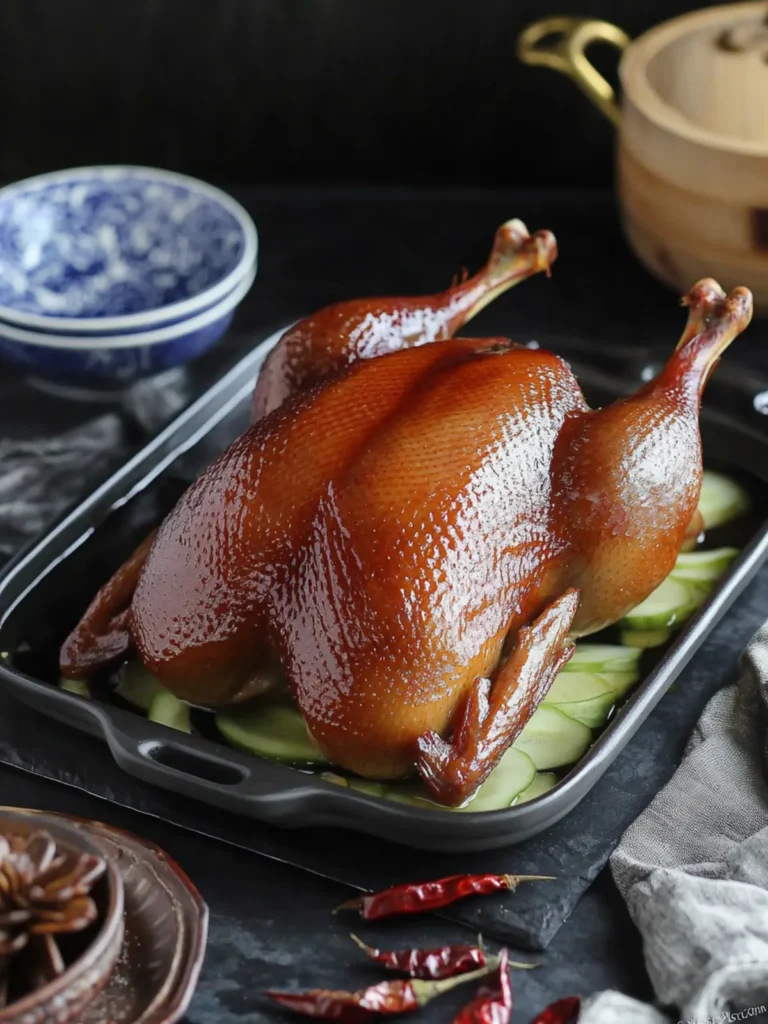
There’s something undeniably satisfying about preparing a dish that seems to have a whole world of complexity yet can be made right in your own kitchen. Imagine the first whiff of Peking Duck—a delightful blend of sweet, savory, and a hint of aromatic spices. This easy home version of Peking Duck invites you to indulge in that quintessential experience without the need for a lavish restaurant setting.
I stumbled upon this recipe after a festive gathering where a beautifully roasted duck left everyone raving over its crispy skin and succulent meat. As I meticulously crafted this delightful dish at home, I realized how fulfilling it could be to recreate such a memorable meal for family and friends. Not only does this version deliver on flavor, but it also allows for a culinary adventure that can transform any ordinary evening into a celebration. Get ready to embark on this delectable journey, and impress your loved ones with a dish that’s not just dinner—it’s an experience!

Why is Peking Duck, An Easy Home Version special?
Culinary Adventure: Crafting this Peking Duck at home turns cooking into a delightful experience.
Crispy Skin: Achieving that iconic crispy skin while ensuring juicy meat is easier than you think!
Flavor Explosion: The blend of spices creates a flavor profile that’s hard to resist.
Impressive Presentation: Serve it to guests, and they’ll think you’ve been trained in a five-star kitchen!
Time Well Spent: Despite the wait, the actual cooking process is straightforward and rewarding.
Perfect for Sharing: This dish transforms any meal into a communal feast, making it ideal for gatherings.
Embrace the challenge, and your family will thank you for this unforgettable dining experience!
Peking Duck Ingredients
For the Duck
• Duck – a 2.5kg/5.5lb duck is ideal for achieving tender, flavorful meat.
• Fine Salt – 2 tablespoons help to draw out moisture and flavor the skin.
For the Glaze
• Maltose – 2 tablespoons adds a beautiful, shiny finish to the crispy skin.
• Hot Water – 120 ml dissolves the maltose, ensuring an even glaze.
• Vinegar – 1 teaspoon balances sweetness and enhances the glaze’s texture.
For the Aromatics
• Scallions – 2 stalks, to be stuffed inside the duck for added flavor.
• Garlic – 1 head, quartered for a fragrant stuffing.
• Apples – 2, quartered, adding a sweet note to enhance the savory profile.
• Star Anise – 4 pieces introduce a warm, slightly sweet aroma.
• Bay Leaves – 4 leaves for depth and heartiness.
• Cassia Cinnamon – 2 pieces bring a touch of warmth and sweetness.
For the Sauce
• Sweet Bean Sauce – 3 tablespoons for a rich, savory element that complements the duck beautifully.
• Sugar – 1 teaspoon to enhance the sauce’s flavor.
For Serving
• Peking Duck Pancakes – homemade or shop-bought to wrap up the delicious duck.
• Scallions – julienned for a fresh crunch in every bite.
• Cucumber – peeled and cut into sticks, adding a refreshing element to the dish.
This delightful Peking Duck recipe combines aromatic ingredients for a memorable culinary experience!
How to Make Peking Duck
-
Prepare the Duck: Pat dry the duck with kitchen paper and rub salt over the skin and inside the cavity. Place it on a wire rack over a tray to catch drips, and let it rest for 1 hour on the counter.
-
Blanch the Duck: Bring 1½ liters of water to a boil, then carefully pour it over the entire duck skin, flipping it to coat both sides. Use a deep tray or sink to avoid mess.
-
Make the Glaze: In a bowl, combine maltose, hot water, and vinegar until fully dissolved. Brush this mixture generously over the duck’s skin, then let it rest in the fridge for 1 hour before applying a second layer.
-
Refrigerate the Duck: Keep the duck uncovered in the refrigerator for 24 to 48 hours to develop a crispy skin texture.
-
Prepare for Roasting: One hour before roasting, remove the duck from the fridge to bring it to room temperature. Stuff the duck with all the aromatics (scallions, garlic, apples, star anise, bay leaves, and cassia cinnamon) and seal the openings with toothpicks or skewers.
-
Preheat Oven: Preheat your oven to 200°C/390°F (or 220°C/425°F for conventional). Place the duck on the middle rack with the breast side facing up, and a roasting tray below to catch drippings. Cook for 15 minutes.
-
Reduce Heat: Lower the oven temperature to 180°C/350°F (or 200°C/390°F for conventional). Cover the tips of the wings and ends of the legs with aluminum foil and continue cooking for about 60 minutes. Use an instant-read thermometer to check for doneness—it should reach 74°C/165°F.
-
Rest the Duck: Remove the duck from the oven and allow it to rest for 15 minutes to let the juices redistribute.
-
Make the Sauce: In a pan, heat ½ tablespoon of duck fat, then stir in sweet bean sauce and sugar. Simmer on low heat until tiny bubbles appear, then transfer to a small serving dish and whisk.
-
Serve the Duck: Steam the pancakes for 3 minutes if cold. Slice the duck into pieces, serve wrapped in pancakes smeared with sauce, and topped with scallions and cucumber sticks.
-
Optional: After most of the meat has been removed, boil the carcass in water with Napa cabbage or winter melon, seasoned with salt and white pepper for a delicious broth.
Optional: Garnish with fresh herbs for added flavor and color.
Exact quantities are listed in the recipe card below.
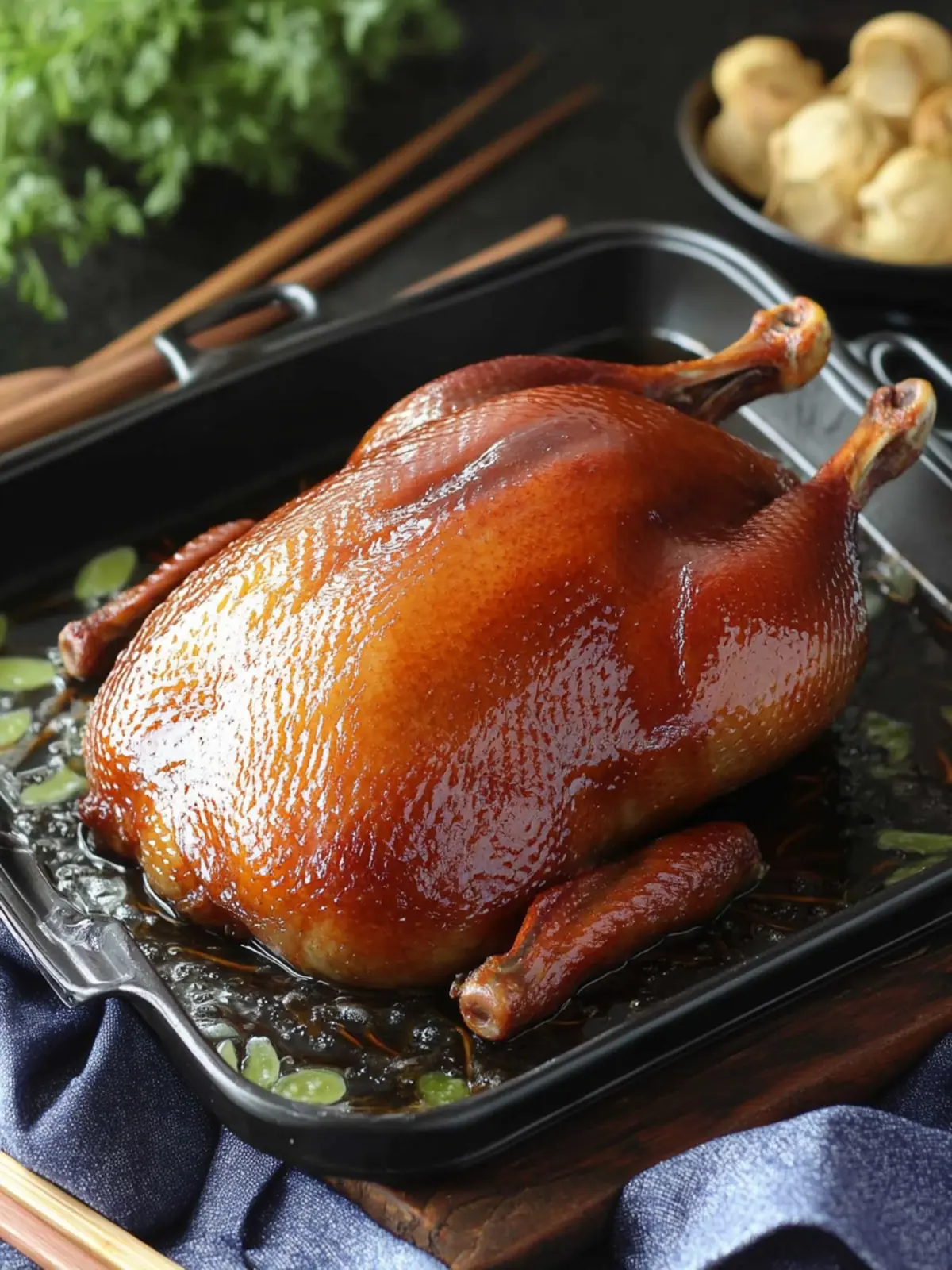
How to Store and Freeze Peking Duck
Fridge: After cooking, store leftover Peking Duck in an airtight container in the fridge for up to 3 days. This ensures the meat stays juicy and the skin remains somewhat crispy.
Freezer: If you want to keep it longer, you can freeze cooked Peking Duck wrapped tightly in plastic wrap, followed by foil, for up to 3 months. This helps prevent freezer burn and keeps flavors intact.
Reheating: To reheat, thaw the duck overnight in the fridge, then place in a preheated oven at 180°C/350°F until warmed through. For best results, reheat uncovered to maintain crispiness.
Pancake Storage: Store any leftover pancakes in an airtight container at room temperature for 1-2 days, or wrap them and freeze for up to a month to enjoy with your Peking Duck later!
Expert Tips for Peking Duck
Drying the Duck: Ensure that the duck is thoroughly dried before salting; this promotes a crispy skin when roasted.
Cooling Time: Refrigerate the duck uncovered for at least 24 hours to dry out the skin—this step is essential for achieving that signature crispiness.
Glaze Application: Apply the maltose glaze in two layers, allowing it to rest in the refrigerator between applications; this enhances the richness of the Peking Duck skin.
Thermometer Magic: Use an instant-read thermometer to check the doneness of the duck; it should reach 74°C/165°F to ensure juicy, perfectly cooked meat.
Resting Period: Don’t skip the resting time after roasting; this allows the juices to redistribute, keeping your meat succulent and flavorful.
Wrap it Right: Serve with pancakes, ensuring everyone can customize their wraps with sauce, duck, scallions, and cucumber—it’s the perfect way to enjoy your homemade Peking Duck!
Variations & Substitutions for Peking Duck
Feel free to tweak this incredible recipe to match your taste preferences or dietary needs!
- Gluten-Free: Use gluten-free sweet bean sauce and ensure your pancakes are gluten-free, too, for a safe and delicious option.
- Spicy Twist: Add sliced fresh chili or chili flakes to the stuffing for an extra kick that will awaken your taste buds. Embrace the heat and watch your guests enjoy each bite!
- Fruit Infusion: Swap out the apples for pears or even pineapple to bring a tropical sweetness that pairs beautifully with the savory duck. The new flavors will surprise and delight your palate!
- Herbaceous Touch: Add fresh herbs like thyme or rosemary in the stuffing for a fragrant twist that takes this classic dish to a new level. The aroma will fill your kitchen with warmth as it cooks.
- Smoke Flavor: Inject the duck with a bit of liquid smoke before roasting for an infused smoky flavor that adds depth to your dish. It’s a simple way to introduce a whole new layer of deliciousness!
- Vegan Alternative: Substitute the duck with a large, firm tofu block or jackfruit for a plant-based version. Prepare it with the same spices and stuffing for a unique but equally tasty experience.
- Citrus Zest: Add some orange or lemon zest to your filling or sauce for a refreshing brightness that cuts through the richness of the duck. This little change will leave a lasting impression!
- Alternative Sweetener: Use honey or agave syrup if you don’t have maltose on hand; just adjust the amount as these sweeteners can be sweeter than maltose. It’s a quick substitution that maintains all the flavor!
Each of these variations invites you to explore new flavor profiles while still enjoying the essence of this beloved dish!
Make Ahead Options
These Peking Duck preparations are perfect for busy home cooks looking to simplify their meal planning! You can marinate and prepare the duck up to 48 hours ahead by following the initial steps—seasoning and applying the glaze. Simply pat the duck dry, rub it with salt, and refrigerate it uncovered to enhance that iconic crispy skin. On the day of serving, stuff the duck with your aromatics and allow it to come to room temperature for about 1 hour before roasting. This method not only saves you time on the day of the meal but ensures your duck turns out just as delicious, bursting with flavor and perfectly tender.
What to Serve with Peking Duck?
Imagine the delightful balance of dishes that can enhance your special evening with its rich flavors and crispy textures.
-
Crispy Sweet Potato Wedges: Their sweetness complements the savory duck, bringing a unique flavor that ties the meal together.
-
Stir-Fried Bok Choy: This bright, vibrant green brings an earthy crunch that’s perfect alongside the rich duck flavors.
-
Soy Sauce Noodles: The slight saltiness from the noodles offers a comforting, chewy experience that pairs beautifully with the Peking Duck.
-
Hot and Sour Soup: This classic soup’s tangy broth adds a delightful contrast, awakening your taste buds with each sip.
-
Chilled Cucumber Salad: The refreshing crunch of cucumber drizzled with sesame dressing adds brightness and balances the richness of the duck.
-
Peach Ginger Chutney: A sweet-and-spicy twist that enhances the Peking Duck, adding depth and inviting warmth to the meal.
-
Herbal Jasmine Tea: A fragrant tea to cleanse the palate, its floral notes will enhance the overall dining experience.
Elevate your Peking Duck dinner with these pairings, creating a delightful and memorable feast for you and your loved ones!
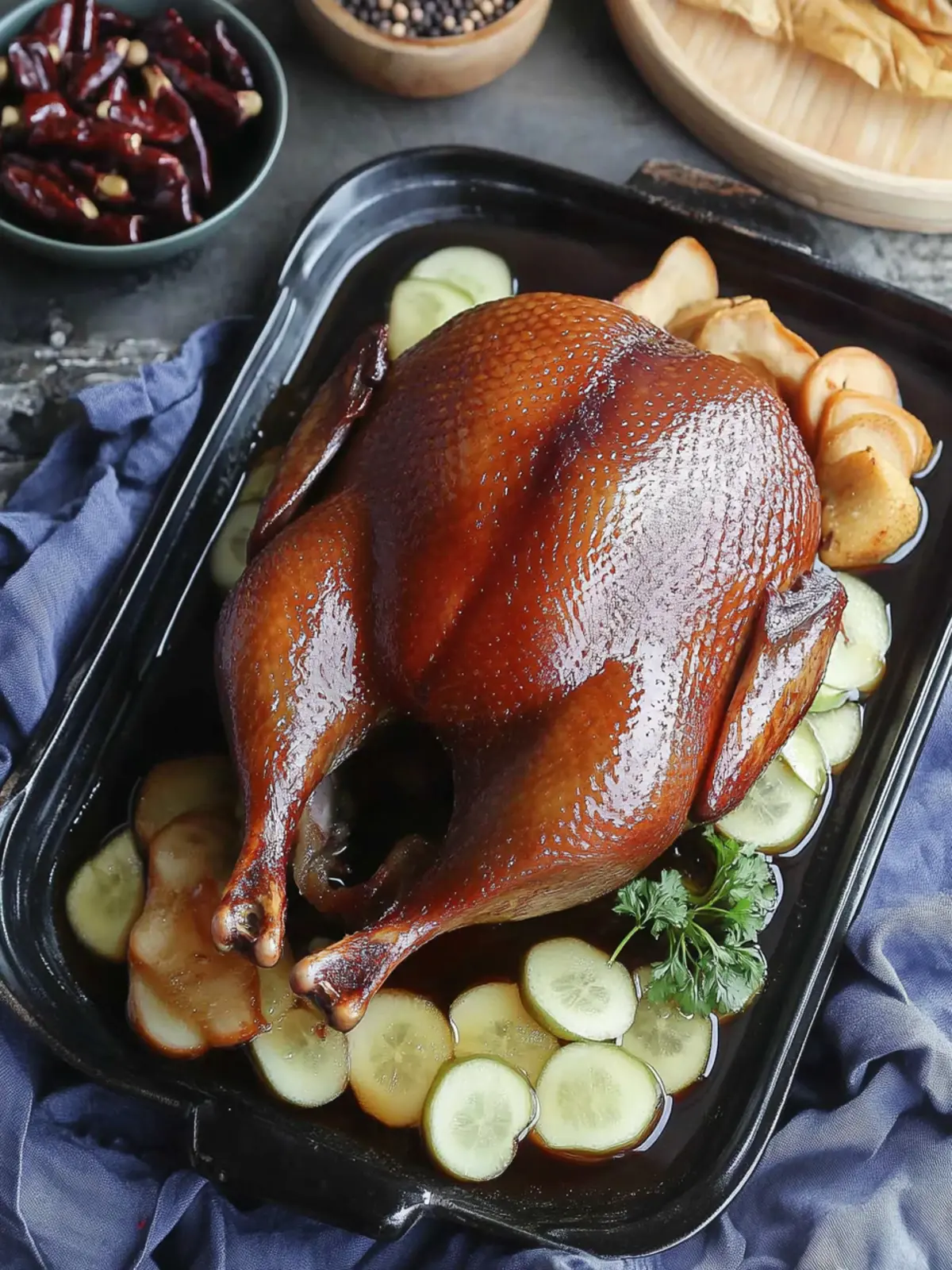
Peking Duck, An Easy Home Version Recipe FAQs
How do I choose the right duck?
Absolutely! Look for a 2.5kg/5.5lb duck that feels well-fleshed but not overly fatty. The skin should be a golden color and free from any dark spots or blemishes. Freshness is key, so always check the sell-by date!
What’s the best way to store leftover Peking Duck?
After cooking, store leftover Peking Duck in an airtight container in the fridge for up to 3 days. Keeping it sealed helps retain its juiciness while the skin remains somewhat crispy. Enjoy it as a delicious leftover meal!
Can I freeze my Peking Duck?
Absolutely! To freeze, wrap the cooked duck tightly in plastic wrap and then in aluminum foil to prevent freezer burn. It should last up to 3 months. When ready to enjoy, thaw it overnight in the fridge before reheating.
How do I reheat frozen Peking Duck without losing its crispiness?
The best way to reheat is by first thawing it overnight in the fridge. Preheat your oven to 180°C/350°F, then place the duck on a baking sheet and heat uncovered. This method helps keep the skin crispy while ensuring the meat warms through within 20-30 minutes.
What do I do if I can’t find sweet bean sauce?
If sweet bean sauce isn’t available, you can use hoisin sauce or make a quick substitute with soy sauce mixed with a touch of sugar to mimic the flavor. While it won’t be exactly the same, it will still add a lovely savory note!
Are there any dietary considerations I should know about?
Yes! Peking Duck is rich in flavor but is also higher in fat content. If you or your guests have dietary restrictions, such as allergies to certain spices or a low-fat diet, consider serving it alongside plenty of fresh vegetables like cucumbers and scallions, and offer smaller portions to encourage moderation!
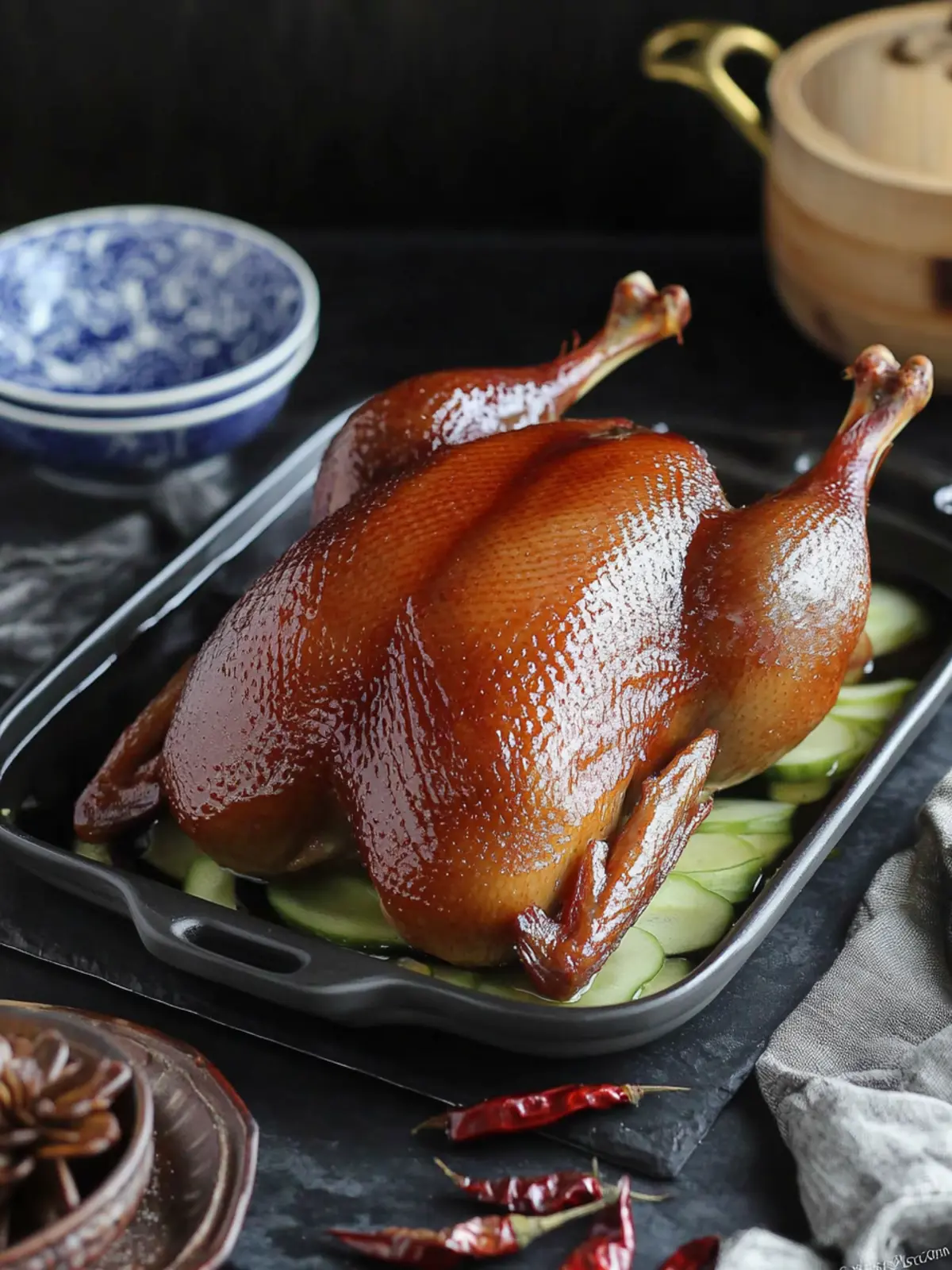
Mouthwatering Peking Duck: Easy Home Version You’ll Love
Ingredients
Equipment
Method
- Pat dry the duck with kitchen paper and rub salt over the skin and inside the cavity. Place it on a wire rack over a tray to catch drips, and let it rest for 1 hour on the counter.
- Bring 1½ liters of water to a boil, then carefully pour it over the entire duck skin, flipping it to coat both sides.
- In a bowl, combine maltose, hot water, and vinegar until fully dissolved. Brush this mixture generously over the duck's skin, then let it rest in the fridge for 1 hour before applying a second layer.
- Keep the duck uncovered in the refrigerator for 24 to 48 hours to develop a crispy skin texture.
- One hour before roasting, remove the duck from the fridge to bring it to room temperature. Stuff the duck with all the aromatics and seal the openings with toothpicks or skewers.
- Preheat your oven to 200°C/390°F (or 220°C/425°F for conventional). Place the duck on the middle rack with the breast side facing up, and a roasting tray below to catch drippings. Cook for 15 minutes.
- Lower the oven temperature to 180°C/350°F (or 200°C/390°F for conventional). Cover the tips of the wings and ends of the legs with aluminum foil and continue cooking for about 60 minutes. Use an instant-read thermometer to check for doneness—it should reach 74°C/165°F.
- Remove the duck from the oven and allow it to rest for 15 minutes to let the juices redistribute.
- In a pan, heat ½ tablespoon of duck fat, then stir in sweet bean sauce and sugar. Simmer on low heat until tiny bubbles appear, then transfer to a small serving dish and whisk.
- Steam the pancakes for 3 minutes if cold. Slice the duck into pieces, serve wrapped in pancakes smeared with sauce, and topped with scallions and cucumber sticks.
- After most of the meat has been removed, boil the carcass in water with Napa cabbage or winter melon, seasoned with salt and white pepper for a delicious broth.