
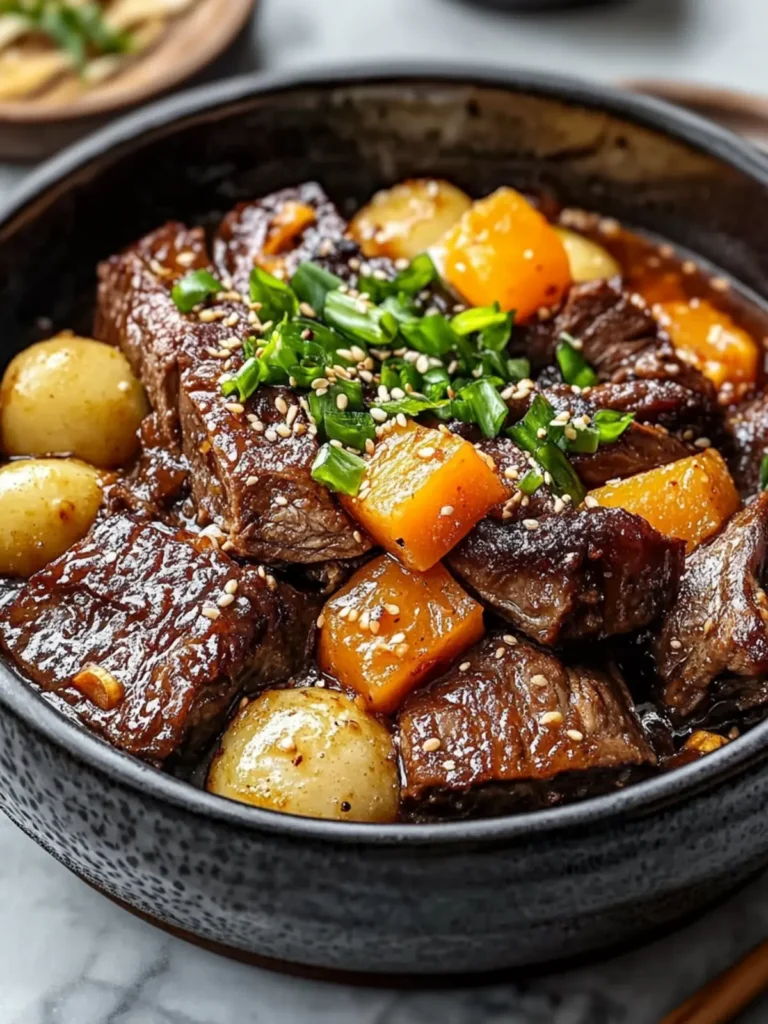
There’s a special moment when you lift the lid off a bubbling pot and the rich, savory smell of Galbi Jjim fills the air—it’s pure comfort food. I discovered this dish during a cozy evening with friends, where the conversation flowed as freely as the laughter, and the food stole the show. With tender beef short ribs braised in a luscious mixture of soy sauce, aromatic garlic, and the sweetness of Asian pear, this recipe brings a delightful twist to your usual dinner routine.
As the flavors meld together, each bite of Galbi Jjim is a warm hug, transporting you straight to a bustling Korean kitchen. It’s perfect for gathering around the table with loved ones or for a gratifying night in when you want to impress. You might be surprised to find that the best Galbi Jjim recipe doesn’t just deliver on taste but is also surprisingly simple to make. So roll up your sleeves and let’s bring this vibrant dish to life!

Why is this the Best Galbi Jjim Recipe?
Comforting and hearty, this dish will quickly become a family favorite, drawing everyone to the table for a warm meal together. Flavor-packed ingredients like soy sauce, Asian pear, and aromatic garlic work together to create a savory depth that’s absolutely irresistible. Versatile in nature, you can mix and match vegetables based on what you have on hand, turning this into a unique creation every time. Time-well-spent, the long braising process allows the meat to become fall-off-the-bone tender, while developing a glossy sauce that elevates your dinner experience. Best of all, you can easily impress guests with this restaurant-quality dish that’s perfect for any occasion! If you’re looking for delicious side dishes to pair with it, don’t forget to check out my guide on 5 Essential Korean Side Dishes.
Best Galbi Jjim Ingredients
For the Braise
• 3 pounds beef short ribs bone-in – The key to tender Galbi Jjim, ensuring rich flavor and texture.
• Cold water for soaking – Soaking the ribs helps remove impurities for a cleaner taste.
• ½ cup soy sauce – Provides a salty depth that enhances the overall umami flavor.
• 2 cups water or beef broth – A flavorful base for the braising liquid; broth adds even more richness.
• 1 Asian pear peeled and grated (or 1 small apple) – Adds natural sweetness and helps tenderize the meat.
• ¼ cup brown sugar – Balances the savory elements with a hint of sweetness.
• 3 tablespoons rice wine or mirin – Brings a subtle sweetness and depth to the marinade.
• 6 cloves garlic minced – Infuses the dish with aromatic goodness, enhancing its savory profile.
• 1 tablespoon fresh ginger grated – Adds warmth and a zesty note to the dish.
• 1 tablespoon sesame oil – A hint of nuttiness that rounds out the flavors.
• 1 teaspoon black pepper – Adds a gentle spice and warmth to the dish.
For the Vegetables
• 1 large onion quartered – Melts into the sauce, providing sweetness as it cooks.
• 2 carrots cut into large chunks – Adds color and a slight sweetness to the mix.
• 1 small daikon radish cut into chunks – Contributes a crisp texture and unique flavor.
• 2 medium potatoes quartered – Absorb the flavors of the braising sauce and add heartiness.
• 4 –5 dried shiitake mushrooms optional – Deepens the umami flavor profile if included.
• 8 –10 chestnuts optional – Provide a sweet, nutty contrast to the savory elements.
For Garnishing
• Sliced green onions – Adds a fresh crunch and vibrant color to your dish.
• Sesame seeds – Sprinkle on top for a nutty finish and added texture.
With these carefully selected ingredients, you’re set to create the best Galbi Jjim recipe that’s sure to please everyone at the table!
How to Make Galbi Jjim
-
Soak the Ribs: Place beef short ribs in a large bowl and cover them with cold water. Allow them to soak for 1 hour, changing the water once or twice. This step helps ensure a clean taste—drain and rinse well afterward.
-
Blend the Marinade: In a mixing bowl or blender, combine soy sauce, 2 cups of water or beef broth, grated Asian pear, brown sugar, rice wine, minced garlic, grated ginger, sesame oil, and black pepper. Blend until combined, creating a luscious, aromatic marinade.
-
Blanch the Ribs: Bring a pot of water to a rolling boil and add the short ribs. Blanch for 5–7 minutes to remove impurities. Drain and rinse the ribs under cold water to cool them down and keep them clean.
-
Start Braising: Place the blanched ribs in a Dutch oven and pour the prepared marinade over them. Bring to a gentle boil, then lower the heat and cover. Simmer for about 1½ hours—watch for that tender meat starting to break apart!
-
Add the Vegetables: Mix in the quartered onion, large chunks of carrots, daikon radish, potatoes, and any optional ingredients like dried shiitake mushrooms or chestnuts. Continue cooking uncovered or partially covered for 45–60 minutes until the meat is fork-tender and vegetables are soft.
-
Thicken the Sauce: If there’s excess fat on the surface, skim it off. Let the sauce simmer uncovered for a few minutes until it becomes glossy and slightly thickened—this is where flavor magic happens!
-
Serve the Dish: Carefully transfer your delicious Galbi Jjim to a serving dish. Garnish with sliced green onions and sesame seeds for added color and crunch. Serve hot, paired with steamed rice and your favorite Korean side dishes.
Optional: For extra color, add fresh herbs or microgreens as a garnish.
Exact quantities are listed in the recipe card below.
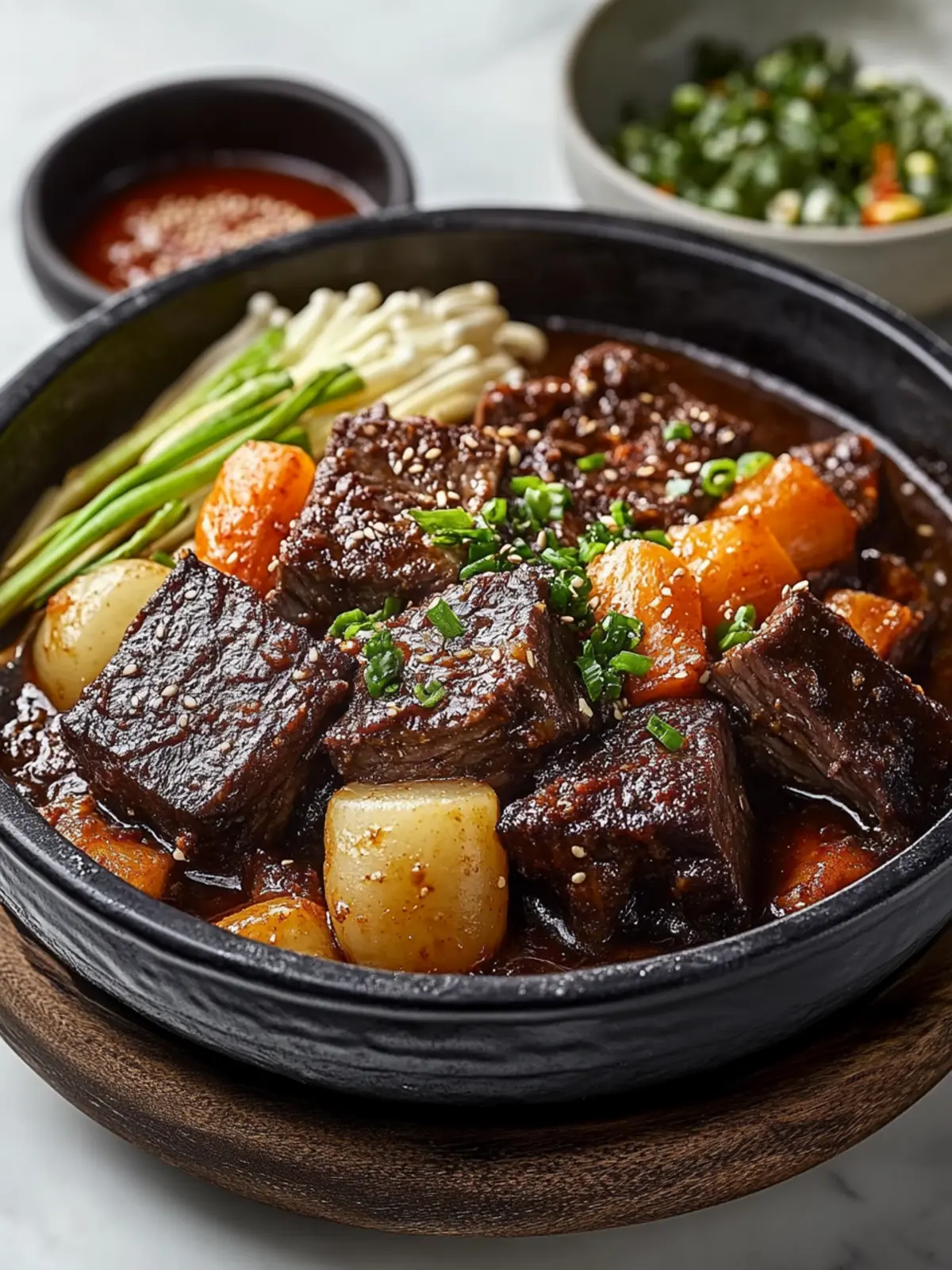
Expert Tips for the Best Galbi Jjim
-
Soaking Matters: Soaking the beef short ribs is essential. It helps remove excess blood and impurities, resulting in a cleaner-tasting dish.
-
Perfect Marinade: Ensure your marinade is blended thoroughly for a uniform flavor. Missing ingredients can lead to an unbalanced taste in your best Galbi Jjim recipe.
-
Don’t Rush the Braise: Slow and low is the way to go! Allowing sufficient time for braising ensures the meat becomes tender and infused with deep flavors.
-
Vegetable Variations: Feel free to experiment with seasonal vegetables. Aromatic onions and sweet carrots are classics, but you can add what you love or have on hand!
-
Skip the Fat: If you see excess fat on top of your dish, don’t hesitate to skim it off before serving. This creates a lighter sauce that enhances the dish’s flavors.
-
Final Touches: Garnish generously with green onions and sesame seeds for added texture and a fresh finish, making your best Galbi Jjim look visually appealing!
Make Ahead Options
These Galbi Jjim are perfect for meal prep enthusiasts! You can soak the beef short ribs and prepare the marinade up to 24 hours in advance, refrigerating the ribs in the marinade overnight to enhance their flavor. Additionally, you can chop the vegetables (onion, carrots, daikon, and potatoes) a day ahead, and store them in airtight containers in the fridge. When you’re ready to cook, simply blanch the ribs, combine them with the marinade and vegetables, and follow the braising instructions. This method ensures you have a delicious meal ready with minimal effort on busy weeknights while keeping the meat and veggies just as tender and flavorful as when freshly made.
How to Store and Freeze Galbi Jjim
Fridge: Store leftover Galbi Jjim in an airtight container for up to 3 days. Reheat gently on the stovetop or in the microwave until warmed through.
Freezer: For longer storage, freeze Galbi Jjim in a sealed freezer-safe container for up to 3 months. Defrost overnight in the fridge before reheating.
Reheating: Reheat thawed Galbi Jjim on low heat on the stovetop with a splash of water or broth to retain moisture. Enjoy the comforting flavors all over again!
What to Serve with Galbi Jjim?
Gather your loved ones around the table and take dinner to the next level with these delectable side dish pairings!
-
Steamed Rice: Perfectly fluffy rice absorbs the rich, savory sauce of the Galbi Jjim, balancing the flavors brilliantly.
-
Kimchi: This spicy and tangy fermented vegetable side adds a punch of flavor and a probiotic boost to your meal.
Pairing the warmth of Galbi Jjim with the refreshing crunch of kimchi creates a delightful balance. The flavors mingle beautifully, making every bite a sensation.
-
Korean Potato Salad: Creamy and slightly sweet, this dish offers a delightful contrast to the savory notes of the stew, ensuring a well-rounded meal.
-
Miso Soup: A light miso broth complements the richness of the Galbi Jjim, creating a harmonious starter that awakens the palate.
-
Pickled Radishes: These vibrant, tangy bites provide a refreshing crunch, cutting through the hearty dish while adding a splash of color to your table.
-
Sautéed Spinach: Quick-cooked with garlic and sesame oil, sautéed spinach adds a fresh, nutritious element, bringing vibrant green to your plate.
-
Sooja Ddeok (Rice Cake): These chewy delights offer a fun texture, perfect for dipping in the sauce, enhancing the overall experience of your meal!
-
Chilled Soju or Makgeolli: A glass of cold soju or this traditional rice wine beautifully enhances the meal, providing a smooth finish.
-
Fruit Salad: A light, fruity dessert helps cleanse the palate, allowing you to savor every last bite of your flavorful Galbi Jjim.
Galbi Jjim Variations
Explore the delightful possibilities to make this dish your own and bring new flavors to your table!
-
Dairy-Free: Replace any butter or cream with coconut milk for a rich, creamy texture that complements the savory braise.
-
Spicy Kick: Add 1-2 tablespoons of gochujang (Korean chili paste) to the marinade for a fiery twist. This adds depth and beautiful heat.
-
Vegetarian Delight: Substitute the beef short ribs with hearty mushrooms like portobello or king oyster mushrooms for a delicious plant-based version.
-
Additional Sweetness: Incorporate a tablespoon of honey or maple syrup into the marinade for an extra layer of sweetness that harmonizes beautifully with the savory elements.
-
Curry Infusion: Stir in a teaspoon of curry powder before cooking to introduce an unexpected, aromatic flair that tantalizes the taste buds.
-
Root Veggie Boost: Feel free to add parsnips or sweet potatoes alongside regular potatoes for a delightful twist in flavor and texture.
-
Herbaceous Touch: Fresh herbs like thyme or rosemary can be added during the last 30 minutes of cooking for a fragrant, herby undertone.
-
Nutty Flavor: Toss in a handful of crushed peanuts or pine nuts just before serving for added crunch and flavor contrast against the tender meat.
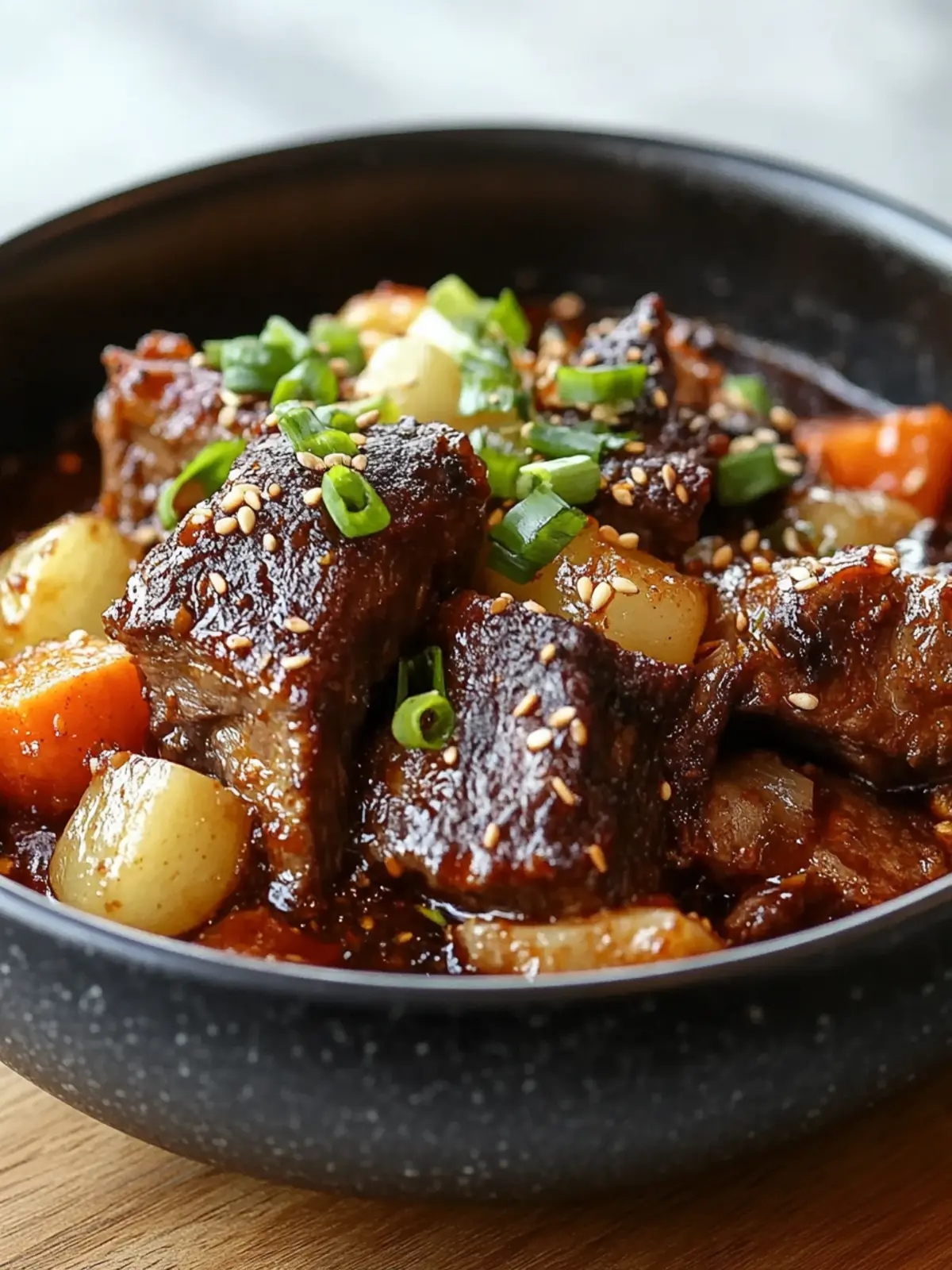
Galbi Jjim Recipe FAQs
What should I look for when selecting beef short ribs?
Absolutely! When choosing beef short ribs, look for well-marbled cuts with a good amount of fat, as this will enhance the flavor and tenderness during cooking. The meat should have a rich red color without any dark spots, which indicates freshness. Bone-in pieces are ideal for Galbi Jjim, as they add extra flavor to the braise.
How long can I store leftover Galbi Jjim in the fridge?
Very! You can store leftover Galbi Jjim in an airtight container in the fridge for up to 3 days. When you’re ready to enjoy it again, simply reheat it gently on the stovetop over low heat or in the microwave, ensuring it’s warmed throughout.
Can I freeze Galbi Jjim, and if so, how?
Absolutely! To freeze Galbi Jjim, first let it cool completely. Then, transfer it to a freezer-safe airtight container, leaving some space at the top for expansion. Freeze it for up to 3 months. When you’re ready to enjoy it again, defrost it overnight in the fridge before reheating to retain moisture and flavor.
What should I do if my Galbi Jjim sauce is too thin?
If your sauce turns out too thin, don’t worry! You can simmer it for a few more minutes over medium heat to help it thicken. If it’s still not thick enough, mix a teaspoon of cornstarch with a tablespoon of cold water until smooth, then stir this into the sauce while it’s simmering to thicken it up instantly.
Are there any dietary considerations I should keep in mind?
Definitely! Galbi Jjim contains soy sauce, which is not suitable for gluten-free diets unless you use tamari or a gluten-free alternative. Additionally, if you’re accommodating allergies, be mindful of the brown sugar and any optional ingredients like chestnuts or mushrooms. It’s also a good idea to ask guests about food allergies before serving.
Can I use different vegetables in Galbi Jjim?
Very! The beauty of Galbi Jjim is its versatility. Feel free to swap in seasonal veggies like zucchini, bell peppers, or even sweet potatoes based on your preferences or what’s available. Just keep in mind that cooking times may vary slightly, so adjust accordingly to ensure everything is tender and flavorful!
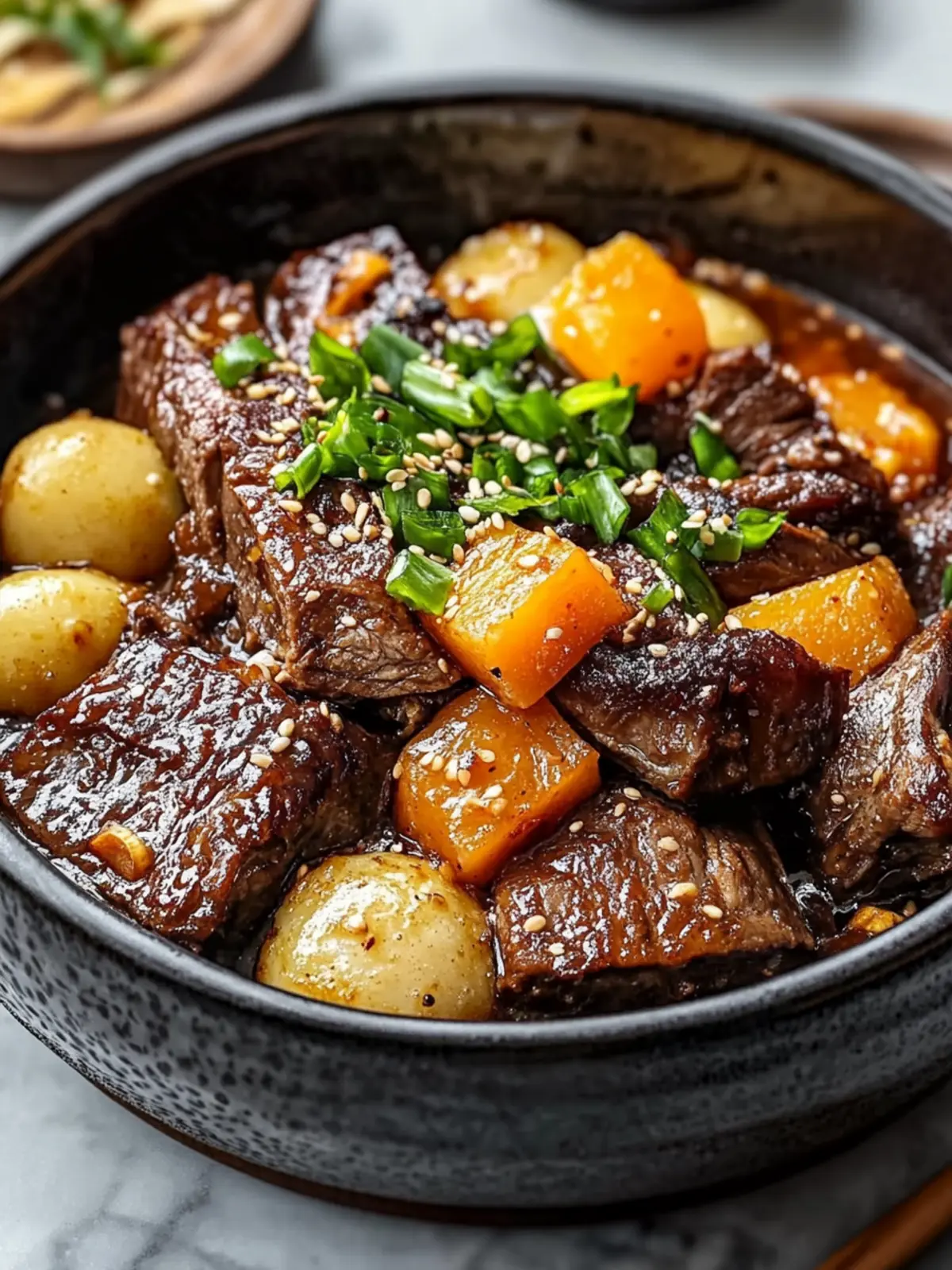
Best Galbi Jjim Recipe for Flavor-Packed Family Dinners
Ingredients
Equipment
Method
- Soak the Ribs: Place beef short ribs in a large bowl and cover them with cold water. Allow them to soak for 1 hour, changing the water once or twice. Drain and rinse well afterward.
- Blend the Marinade: In a mixing bowl or blender, combine soy sauce, 2 cups of water or beef broth, grated Asian pear, brown sugar, rice wine, minced garlic, grated ginger, sesame oil, and black pepper. Blend until combined.
- Blanch the Ribs: Bring a pot of water to a rolling boil and add the short ribs. Blanch for 5–7 minutes to remove impurities. Drain and rinse under cold water.
- Start Braising: Place the blanched ribs in a Dutch oven and pour the prepared marinade over them. Bring to a gentle boil, then lower the heat and cover. Simmer for about 1½ hours.
- Add the Vegetables: Mix in the onion, carrots, daikon radish, potatoes, and optional ingredients. Continue cooking uncovered for 45–60 minutes until meat is tender.
- Thicken the Sauce: Skim off excess fat if necessary. Let the sauce simmer until it becomes glossy and slightly thickened.
- Serve the Dish: Transfer Galbi Jjim to a serving dish. Garnish with green onions and sesame seeds. Serve hot with steamed rice.