
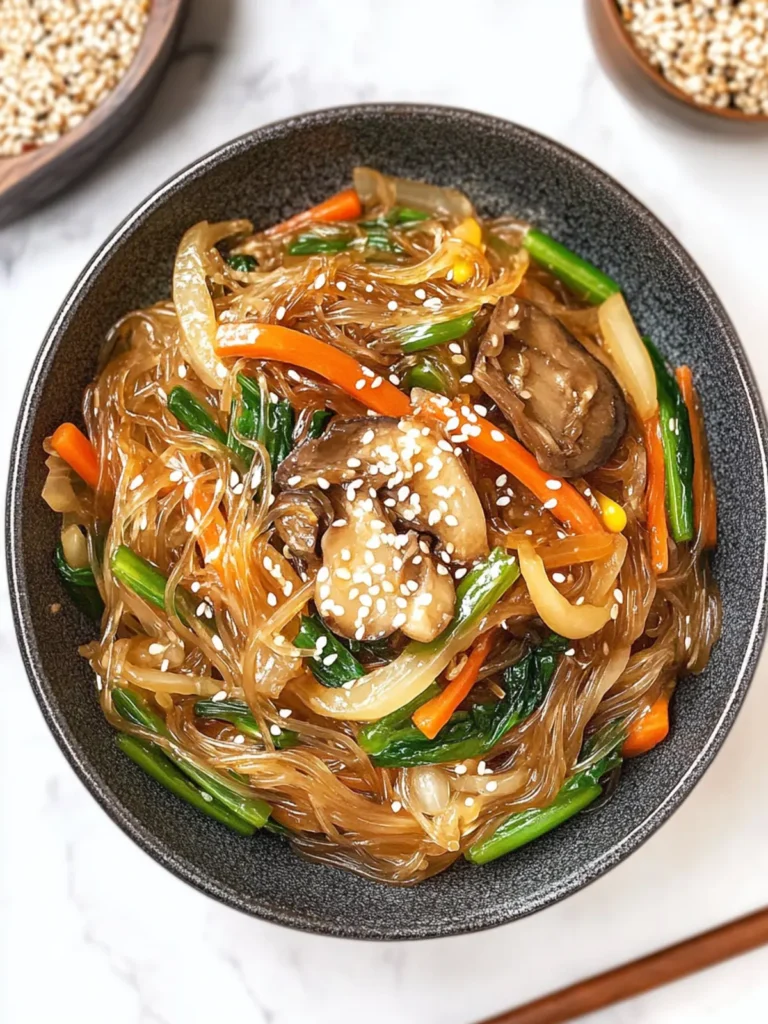
As I stirred the vibrant colors of fresh vegetables with a glossy sheen of sauce, I couldn’t help but feel a sense of excitement. Japchae, a traditional Korean glass noodle stir fry, had landed on my dining table. The sweet potato noodles, with their delightful chewiness, combined beautifully with tender strips of beef and an array of crisp veggies, creating a dish that is as visually stunning as it is delicious.
This recipe is a game changer for anyone seeking a satisfying meal that dances between healthy and indulgent. Plus, it’s incredibly versatile! Whether you’re hosting a dinner party or just seeking a comforting dish for yourself after a long day, Japchae fits the bill perfectly. Ready in about 30 minutes, it offers a delightful burst of flavors that will make you forget about takeout entirely. Let’s dive into this delicious stir fry that’s sure to become a family favorite!

Why will you love Japchae?
Vibrant flavors: This dish delights the senses with a harmonious blend of vegetables and protein, all wrapped in savory sweetness.
Quick and easy: In just about 30 minutes, you can whip up a weeknight dinner that’s both satisfying and memorable.
Customizable: Feel free to swap in your favorite veggies or proteins to make it your own.
Healthy indulgence: Packed with nutrients from spinach, carrots, and more, it’s a guilt-free way to enjoy comfort food.
Crowd-pleaser: Japchae is not just for family dinners; it’s sure to impress at gatherings or potlucks! For more delicious ideas visit our Asian-inspired recipes.
Japchae Ingredients
Explore the delicious components of Japchae, a beloved Korean glass noodle stir fry!
For the Noodles
- Sweet potato glass noodles – 12 ounces; these chewy noodles are the star of the dish, soaking up all the flavors.
For the Protein
- Beef or pork – 16 ounces, cut into strips; add your preferred meat for a protein boost and satisfying texture.
- Eggs – 2 large, beaten; they create a lovely fluffy texture and enrich the overall flavor.
For the Vegetables
- Carrot – 1 large, peeled and julienned; they bring a touch of sweetness and vibrant color.
- Yellow onion – 1 medium, thinly sliced; this adds a savory depth to the stir fry.
- Mushrooms – 3, thinly sliced; their umami flavor enhances the dish, making it more satisfying.
- Baby spinach – 2 cups, packed; packed with nutrients, it adds freshness and a pop of green.
- Green onion – 2 stalks, cut into 1-inch pieces; for a mild onion flavor and a touch of crunch.
For the Sauce and Seasonings
- Soy sauce (light sodium) – 7 tablespoons; this is the foundation of flavor in your Japchae.
- Honey (or brown sugar) – 3 tablespoons; use honey for a subtle sweetness or stick with brown sugar for a deeper flavor.
- Brown sugar (light or dark) – 2 tablespoons; it balances out the saltiness of the soy sauce.
- Toasted sesame oil – 2 tablespoons; this adds a nutty aroma and depth of flavor.
- Salt and black pepper – as needed; season to taste, but remember the sauce has salt too!
- Oil for cooking – as needed; use a neutral oil to cook your ingredients to perfection.
Optional Garnish
- Toasted sesame seeds – for a beautiful finishing touch that adds a delightful crunch.
Get ready to savor every bite of this delicious Japchae dish!
How to Make Japchae
-
Mix the Sauce:
In a bowl, combine the soy sauce, honey (or brown sugar), and brown sugar. Stir well until all the ingredients are blended, and set aside to let the flavors meld. -
Cook the Noodles:
Bring a large pot of water to a boil. Add the sweet potato glass noodles and cook for 10-15 minutes until tender. Stir occasionally to prevent sticking. Drain and rinse under cold water to stop the cooking process, then set aside. -
Prepare the Eggs:
Heat a small amount of oil in a large nonstick pan over medium heat. Pour in the beaten eggs and tilt the pan for an even layer. Cook until set, flip to cook briefly, remove, let cool, and cut into strips. -
Sear the Beef:
In the same pan over medium-high heat, add more oil and the beef strips. Season with salt and pepper, searing until golden brown, about 4-5 minutes. Remove from the pan and set aside. -
Sauté the Vegetables:
Return to medium heat, adding oil as needed. Sauté the carrot for 15-30 seconds, followed by onions and green onion bottoms, mushrooms, spinach, and green onion tops. Lightly season with salt and pepper. Remove the sautéed vegetables and set aside. -
Combine with Sauce:
In the same large pan over medium heat, pour in the prepared sauce. Stir until bubbling and the sugars dissolve, then lower the heat. -
Toss the Noodles and Ingredients:
Add the cooked noodles into the sauce, mixing until well coated. Gently fold in the sautéed vegetables, seared beef, and egg strips until thoroughly combined. Remove from heat. -
Serve and Enjoy:
Plate the Japchae and sprinkle with toasted sesame seeds. This dish can be enjoyed hot, warm, at room temperature, or slightly chilled for a delightful meal!
Optional: For an extra flavor boost, drizzle with more toasted sesame oil before serving.
Exact quantities are listed in the recipe card below.
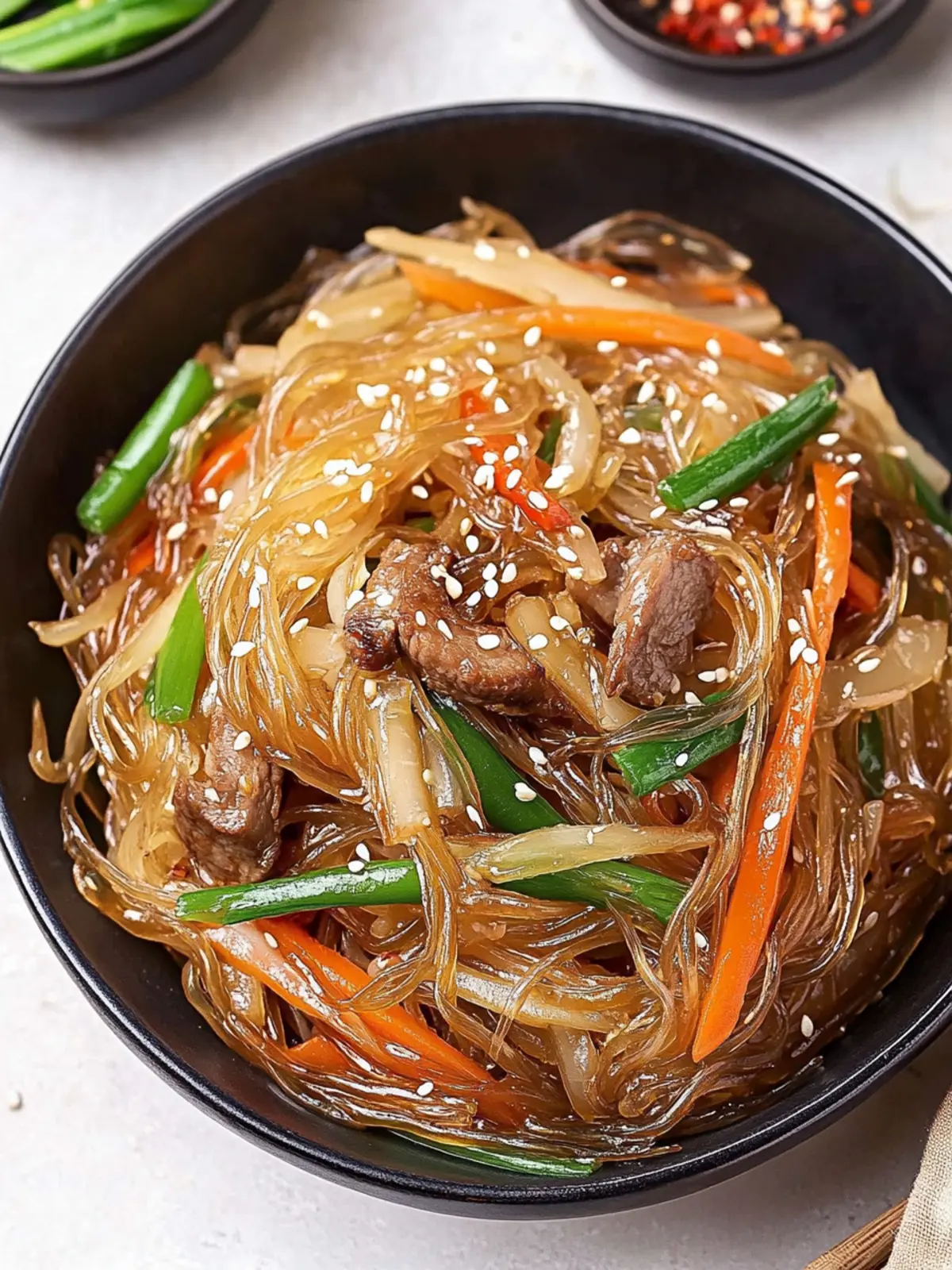
What to Serve with Japchae?
As you savor the delightful flavors of this Korean noodle dish, it’s a joy to consider the perfect companions to enhance your meal experience.
-
Fresh Cucumber Salad: A crisp and refreshing addition that cuts through the richness of the Japchae, making every bite feel light and invigorating.
-
Kimchi: This classic Korean side adds a spicy, tangy kick, balancing the sweetness of the noodles with its fermented flavors.
-
Grilled Korean BBQ: The smoky, charred flavors of marinated meat complement the savory profile of Japchae beautifully, creating a hearty meal.
-
Steamed Broccoli: Offering a nutritious crunch, steamed broccoli adds beautiful color and a gentle earthiness that pairs well without overpowering the dish.
-
Korean Fried Chicken: This crispy, succulent dish echoes the comforting nature of Japchae while introducing a delightful texture that your family will love.
-
Rice: Serve alongside a bowl of steamed jasmine or white rice to soak up any extra sauce, creating a satisfying dining experience.
-
Sweet Red Bean Dessert: A light and sweet end to the meal balances the savory flavors of Japchae, leaving your palate refreshed and happy.
Consider each pairing a piece of the meal puzzle, perfectly enhancing the culinary adventure that is Japchae!
Japchae Variations & Substitutions
Feel free to experiment and make this beloved dish your own with these fun and tasty twists!
-
Vegetable Medley:
Substitute with your favorite vegetables, like bell peppers or snap peas, for added color and crunch. The flexibility here means you can tailor each serving to suit different palates. -
Vegan Delight:
Swap beef with tofu or tempeh, and use a plant-based egg alternative for a wholesome vegan option. The fresh flavors of the veggies will shine through beautifully. -
Spicy Kick:
Add gochujang (Korean chili paste) or red pepper flakes to the sauce for a spicy twist that brings the heat! Just be cautious with the amount to suit your spice tolerance. -
Gluten-Free Choice:
Use tamari instead of soy sauce to create a gluten-free version without compromising on flavor. You can enjoy all the delicious taste while being kind to your dietary needs! -
Noodle Variation:
Replace sweet potato glass noodles with rice noodles or buckwheat noodles for different textures. Each noodle brings its own unique charm to this delightful stir fry. -
Sweetness Swap:
Experiment with maple syrup instead of honey or brown sugar for a delightful change in sweetness, adding a touch of warmth and depth to the sauce. -
Nutty Crunch:
Toss in chopped peanuts or walnuts just before serving for an irresistible crunch and nutty flavor that complements the tender noodles and sautéed veggies. -
Herb Infusion:
Finish your dish with fresh herbs like cilantro or mint for a refreshing taste that elevates the entire meal. A sprinkle of fresh herbs can truly brighten up the flavors in Japchae!
How to Store and Freeze Japchae
Fridge: Store leftover Japchae in an airtight container in the fridge for up to 3 days. Reheat in the microwave or on the stovetop, adding a splash of water for moisture.
Freezer: For longer storage, freeze portions of Japchae in airtight containers for up to 3 months. Thaw overnight in the fridge before reheating, to maintain flavor and texture.
Reheating: When reheating, do so gently over low heat to prevent the noodles from becoming mushy. A splash of soy sauce or a drizzle of sesame oil can enhance flavor upon reheating.
Enjoying Later: Japchae can be enjoyed at room temperature as well, so it’s perfect for meal prep or picnics!
Expert Tips for Japchae
-
Don’t Overcook Noodles: Cook the sweet potato glass noodles until just tender; overcooking can make them mushy. Rinse with cold water to halt the cooking.
-
Layer Flavors: When sautéing vegetables, start with hearty items like carrots and onions, then add softer veggies like spinach for a perfectly harmonized taste.
-
Beef Tips: Sear your beef until golden brown but avoid crowding the pan. This ensures a nice crust while keeping it juicy.
-
End with Sauce: Toss the noodles in the sauce over low heat to ensure every strand is well-coated, maximizing flavor without losing texture.
-
Personalize It: Feel free to swap proteins or add different veggies based on your preference; Japchae is wonderfully versatile and perfect for experimenting!
-
Serving Temperature: This dish is delightful warm or at room temperature, making it a great option for meal prep or potlucks. Enjoy your Japchae!
Make Ahead Options
Japchae is a fabulous choice for meal prepping, saving you valuable time on busy weeknights! You can cook the sweet potato glass noodles, sauté the vegetables, and sear the beef up to 24 hours in advance. Simply refrigerate each component in airtight containers to maintain freshness. When you’re ready to serve, gently reheat the noodles and beef in a pan over low heat, then add the sautéed vegetables and pour on the prepared sauce to combine. This ensures every bite of your Japchae is just as delicious as when it was first made, letting you enjoy a family-friendly meal with minimal effort!
Japchae Recipe FAQs
What type of sweet potato glass noodles should I use?
Absolutely! Look for sweet potato glass noodles labeled as “dangmyeon” in Asian markets or online. They’re typically sold in dried form and will transform into chewy, delightful noodles once cooked.
How should I store leftover japchae?
Store any leftover japchae in an airtight container in the fridge for up to 3 days. Just be sure to reheat it gently to avoid overcooking the noodles. A splash of water or soy sauce helps prevent dryness during reheating.
Can I freeze japchae for later?
Very easily! To freeze japchae, place portions in airtight containers or freezer bags, removing as much air as possible. It will last for up to 3 months in the freezer. To reheat, thaw overnight in the fridge and warm it gently on the stovetop with a little oil or water.
What can I do if my noodles are too mushy?
If you find your noodles have turned mushy, this can often be due to overcooking. Next time, keep an eye on them while boiling, aiming for that perfect tender yet chewy texture. If they are mushy post-cooking, try remixing them with a dash of soy sauce and stirring them gently while reheating to try and improve their texture.
Is this dish safe for those with allergies?
Keep in mind that soy sauce contains wheat, making this dish unsuitable for those with gluten allergies. For a gluten-free version, substitute with tamari or a gluten-free soy sauce. It’s always a great idea to double-check ingredient labels to accommodate dietary needs!
Can I substitute any of the protein options?
Absolutely! While beef and pork are traditional, you can easily swap these for chicken, shrimp, or even tofu for a plant-based option. Just remember to adjust cooking times accordingly for different proteins!
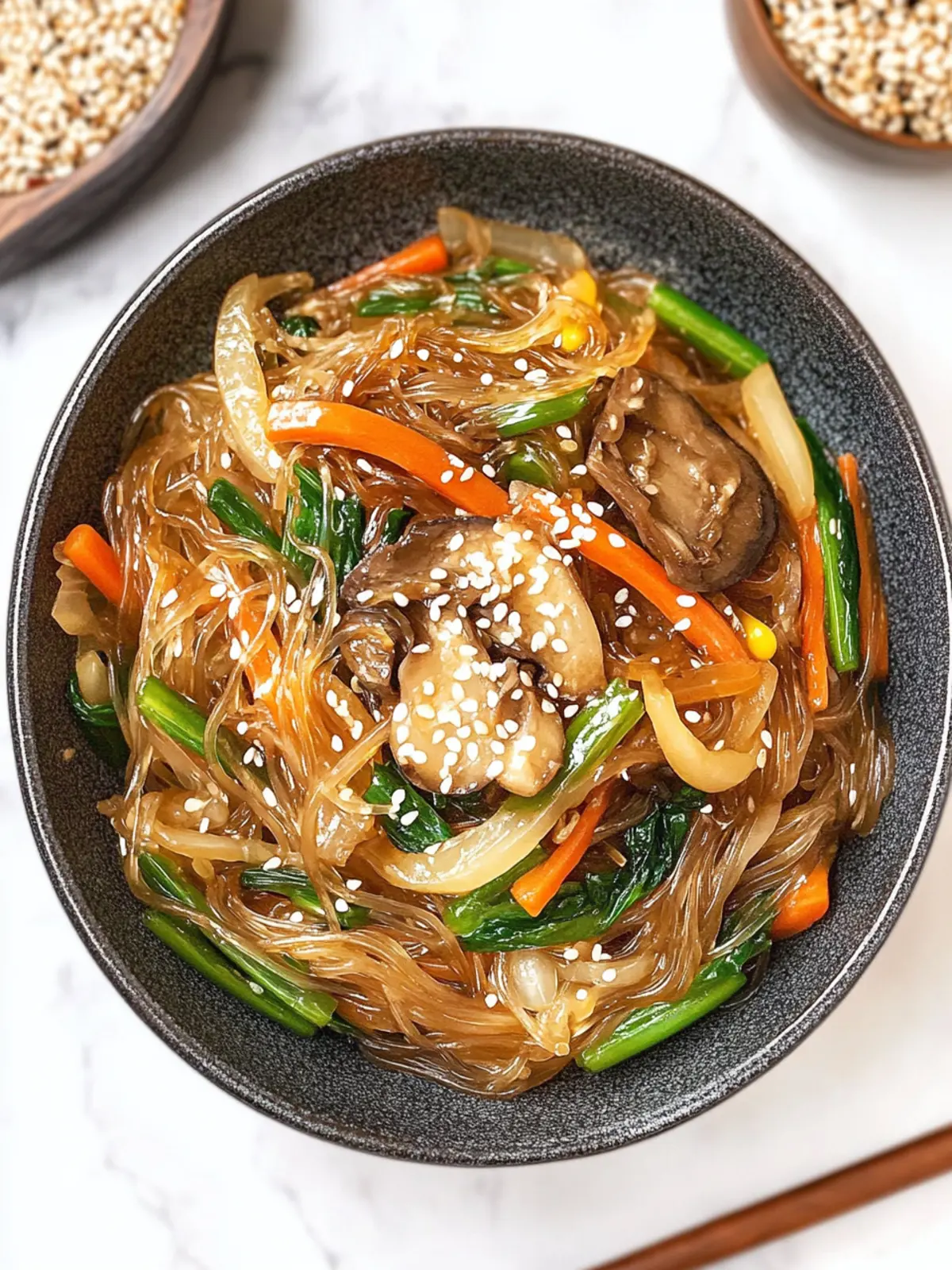
Savory Japchae Korean Glass Noodle Stir Fry You’ll Love
Ingredients
Equipment
Method
- In a bowl, combine the soy sauce, honey (or brown sugar), and brown sugar. Stir well until all the ingredients are blended, and set aside.
- Bring a large pot of water to a boil. Add the sweet potato glass noodles and cook for 10-15 minutes until tender. Drain and rinse under cold water.
- Heat a small amount of oil in a large nonstick pan over medium heat. Pour in the beaten eggs, cook until set, flip briefly, remove, cool and cut into strips.
- In the same pan over medium-high heat, add more oil and the beef strips. Season with salt and pepper, searing until golden brown, about 4-5 minutes.
- Return to medium heat, adding oil as needed. Sauté the carrot for 15-30 seconds, followed by onions, mushrooms, spinach, and green onion tops. Season with salt and pepper.
- In the same pan over medium heat, pour in the prepared sauce. Stir until bubbling, then lower the heat.
- Add the cooked noodles into the sauce, mixing until well coated. Gently fold in the sautéed vegetables, seared beef, and egg strips until combined.
- Plate the Japchae and sprinkle with toasted sesame seeds. Enjoy hot, warm, at room temperature, or slightly chilled.